Formula
full_changes_per_month = 30.44 / change_interval_days
monthly_litter_lbs = material_lbs_per_cat * multi_cat_multiplier
A useful litter schedule starts with daily scooping, then adjusts the full-box change interval by litter material, cat count, box count, and how quickly odor or moisture builds up.
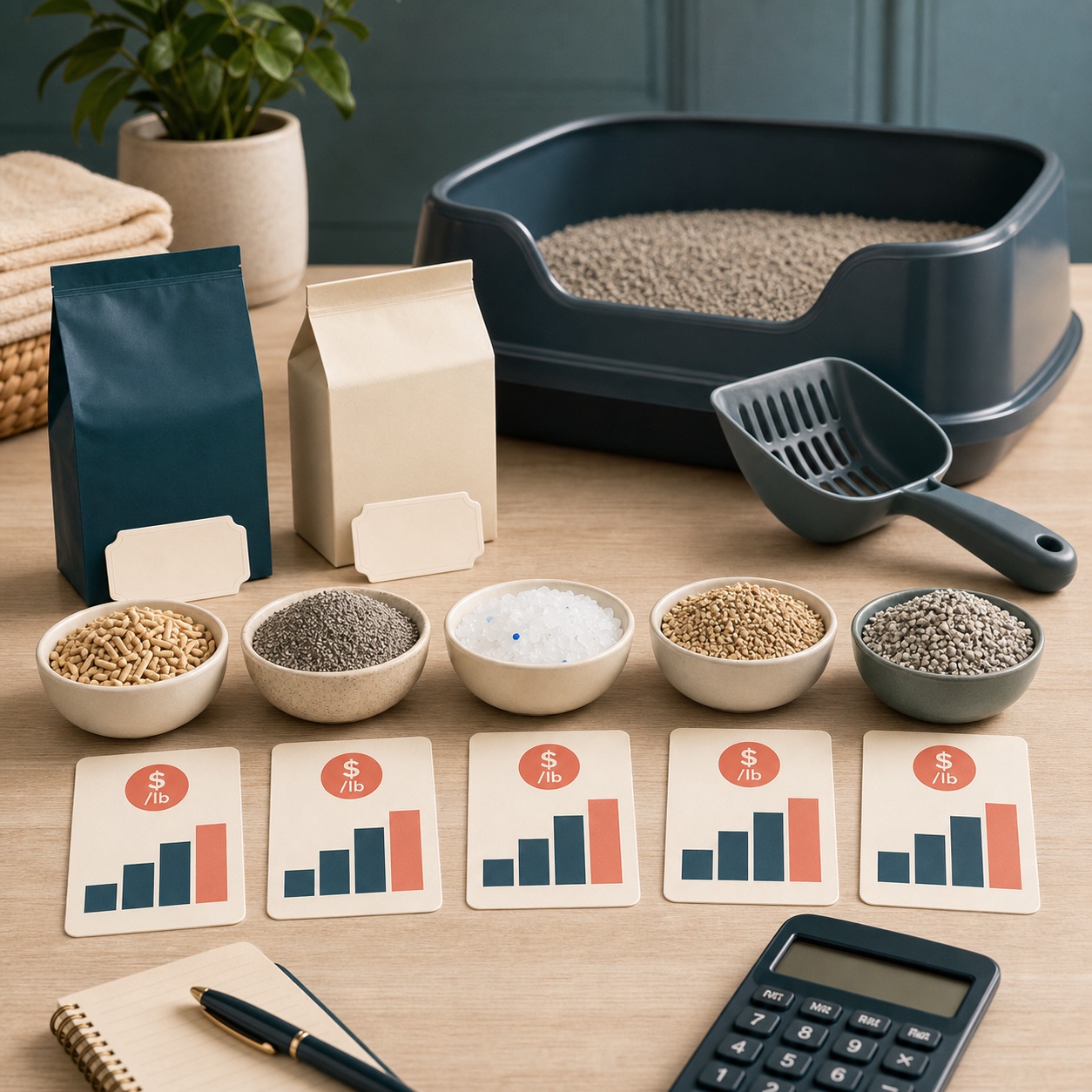
Pick the closest household setup. The result is a budgeting schedule, not a product guarantee or veterinary rule.
| Litter type | Daily maintenance | Typical full change range | One-cat monthly planning use | Cost link |
|---|---|---|---|---|
| Clumping clay | Scoop urine clumps and solids daily. | Often about every 2-4 weeks, sooner if odor or wet buildup appears. | 12-16 lb/month | Calculate monthly cost |
| Silica crystal | Remove solids and stir as the label directs. | Often about every 3-4 weeks when the label and odor control support it. | 6-10 lb/month | Compare value rows |
| Pine or wood pellets | Sift or remove wet sawdust and solids frequently. | Commonly weekly to biweekly, depending on tray design and wet material. | 8-12 lb/month | Plan box setup |
| Plant-based clumping | Scoop daily and top off as clumps are removed. | Often about every 2-4 weeks, with material-specific label guidance. | 10-14 lb/month | Estimate duration |
| Paper / non-clumping | Remove wet sections and solids quickly. | Often needs a shorter refresh cycle, especially in small or humid spaces. | 10-16 lb/month | Scale for more cats |
full_changes_per_month = 30.44 / change_interval_days
monthly_litter_lbs = material_lbs_per_cat * multi_cat_multiplier
Change sooner when odor returns quickly, the bottom layer stays damp, clumps break apart, the cat avoids the box, or the product label gives a shorter refresh schedule. Sudden litter-box avoidance should be discussed with a veterinarian.
"How often to change cat litter" is really a household formula. The box age, material, number of cats, and cleaning routine all change the right cadence.
Daily scooping is the starting point because it removes the highest-impact waste before it spreads through the box. A full change is the reset: empty the box, clean it, dry it, and refill with fresh litter according to the depth recommended by the product or your household routine.
Extra boxes matter. A one-cat home with two boxes puts less pressure on each box than a two-cat home sharing one box. CatCost uses the common one-box-per-cat-plus-one planning guideline as the ideal setup, then shortens the interval when the household has fewer boxes than that target.
After choosing a schedule, connect it to cost. If the box needs a full refresh twice per month, the cheapest package by sticker price may not be the cheapest monthly plan. Use the monthly litter calculator and value table to convert the schedule into pounds and dollars.
Convert package price, package weight, material use, and cat count into a monthly estimate.
Open calculatorUse the product table after you know whether you are comparing clay, silica, wood, or plant-based litter.
Open value tableBudget boxes, scoop, mat, waste bags, cleaning supplies, and replacements before the first refill.
Read guide