Formula
price_per_lb = current_package_price / package_weight_lb
monthly_litter_cost = price_per_lb * monthly_lbs_used
days_per_package = package_weight_lb / monthly_lbs_used * 30.44
Estimate monthly litter cost from the current package price, package weight, material usage, and number of cats. Use this before sorting product tables so a low package price does not hide a short-lasting bag.
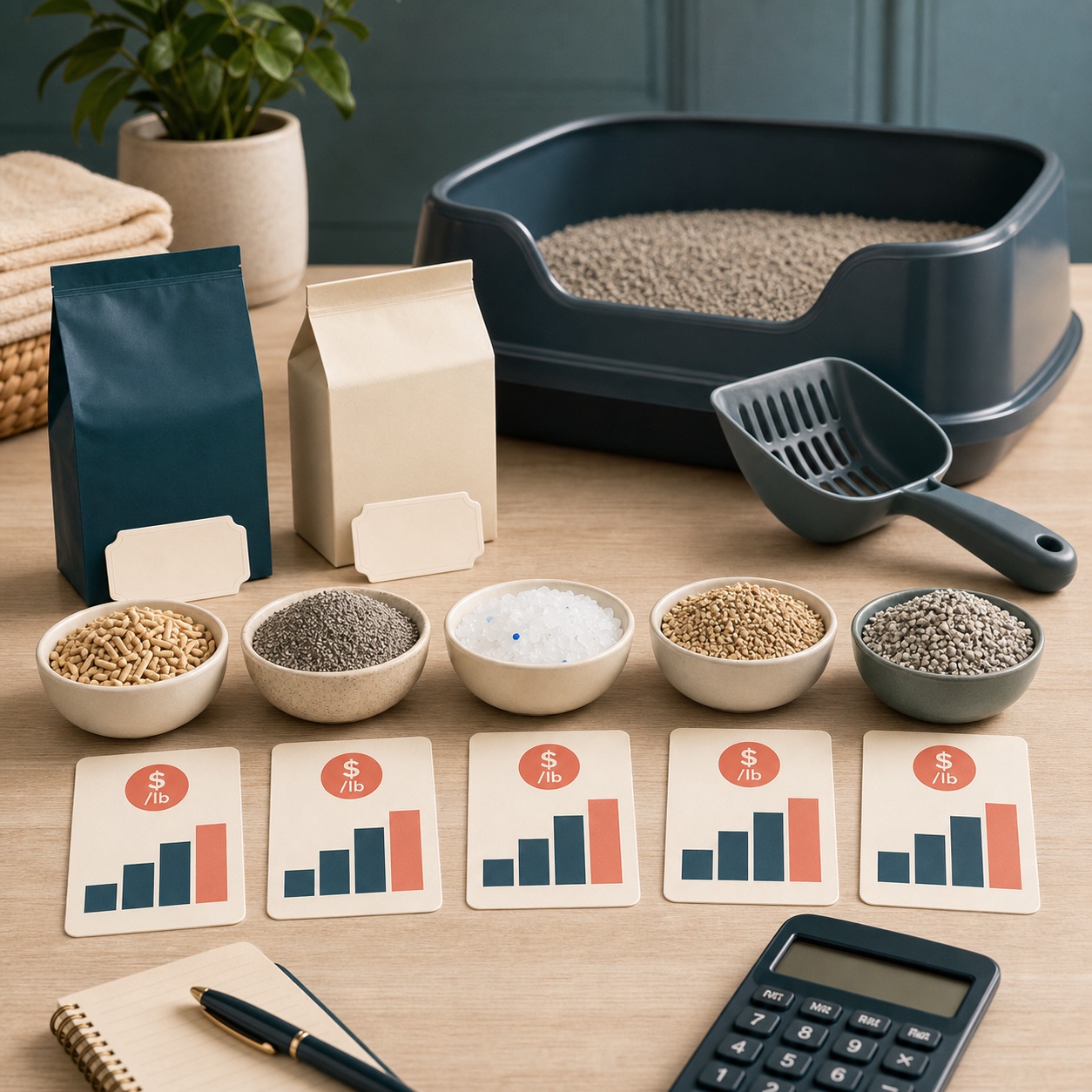
Enter the price and package weight you see today, then adjust monthly pounds for your household.
| Litter scenario | Monthly use basis | Example price per lb | One-cat monthly estimate | Comparison caution |
|---|---|---|---|---|
| Clumping clay baseline | 14 lb/month | $0.95/lb | $13/mo | Good starting point, but dust, tracking, and scent preferences still matter. |
| Silica crystal | 8 lb/month | $3.25/lb | $26/mo | Do not compare to clay by weight alone; usage pattern is different. |
| Pine or wood pellets | 10 lb/month | $1.35/lb | $14/mo | Often uses a different box routine, so household fit can drive real cost. |
| Plant-based clumping | 11 lb/month | $1.85/lb | $20/mo | Compare inside the same material group before calling a row cheapest. |
price_per_lb = current_package_price / package_weight_lb
monthly_litter_cost = price_per_lb * monthly_lbs_used
days_per_package = package_weight_lb / monthly_lbs_used * 30.44
This calculator does not score odor control, dust, tracking, clump strength, cat preference, or medical fit. It only makes the recurring cost visible so you can compare similar litter materials more honestly.
A $15 bag can be expensive if it is small. A $35 box can be cheap if it lasts several months. Monthly math puts both packages on the same basis.
Start with the package price and weight. Divide price by pounds to get price per pound, then multiply by the pounds your household expects to use per month. CatCost uses 30.44 days as the monthly conversion so package duration and monthly cost stay consistent.
Multi-cat households should avoid simply doubling every estimate without context. Food often scales nearly linearly, while litter can have some shared-box efficiency. CatCost uses a conservative multi-cat multiplier in the main ownership calculator, but this page keeps the input editable so you can match your actual box routine.
For shopping, use this page with the reviewed litter table. The calculator gives the formula; the comparison table helps you filter current product rows by material group, package weight, and visible data quality flags.
Turn material, box count, and cat count into a full-change schedule before estimating monthly pounds.
Open schedule calculatorSort the public shortlist by material group, package size, price per pound, and monthly estimate.
Open litter tableConvert package weight into days per package for one-cat and multi-cat households.
Read duration guideCombine litter, food, care, supplies, cleaning, insurance, and emergency reserve in one monthly estimate.
Run calculator